
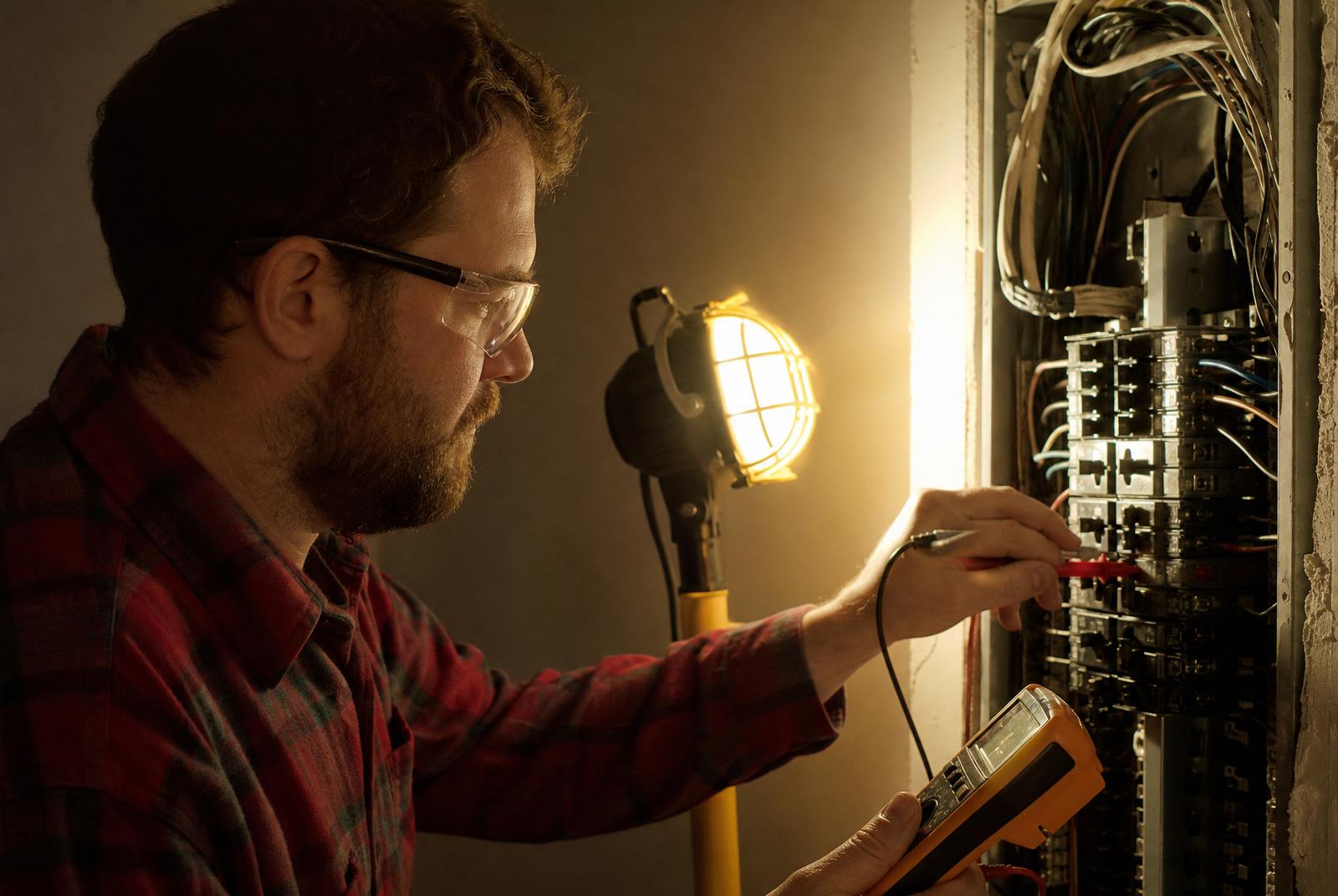
Two businesses in one
Residential service runs on speed-to-lead and small tickets. Commercial projects run on bids, change orders, and 60-day payment terms. One CRM rarely handles both well.
From a Saturday service call to a six-figure commercial project, Reactor is configured around the two-businesses-in-one reality of an electrical contractor — the speed of service work, the discipline of project work, and the upsells hiding inside both.
Veteran-owned
US-based implementation
Not an agency. A partner who stays.
Configured for
Service & specialty retail
Trades, legal, medical, and community-driven retail.
No setup fee
Month-to-month
Cancel anytime. No long-term contract.
Residential service runs on speed-to-lead and small tickets. Commercial projects run on bids, change orders, and 60-day payment terms. One CRM rarely handles both well.
Bids, RFIs, change orders, plan revisions — scattered across inboxes, threads, and printouts. The system has to be the source of truth, not another silo.
A panel hum vs. a permit-required upgrade vs. a generator install — different jobs, different techs, different revenue. Triage at the call shapes the day.
GFCI updates, AFCI requirements, EV charger opportunities — the upsell is in the work that's already in front of the tech. Without prompts, it never happens.
Reactor for electrical handles both sides of the house — fast, phone-driven residential service and structured, milestone-driven commercial project work. One system, two pipelines, the whole business visible in one place.
What it actually looks like to run an electrical contractor on Reactor — both sides of the business, side by side, with the upsells and add-ons surfaced where they belong.
Homeowner calls about a buzzing panel. Reactor captures it instantly, tags it as a safety-priority residential service call, and routes to a tech with panel and service-upgrade experience — not the apprentice doing fixture swaps.
GC sends an RFP for a tenant build-out. Reactor parses it into the commercial pipeline with version control, due dates, and follow-up cadence. The estimator sees what's open, what's stuck, and what's about to age out.
Tech arrives with a checklist tuned to electrical — panel age, GFCI/AFCI gaps, EV charger feasibility, generator interlock opportunities. The conversation about what's also possible happens because the system prompts it.
Service work gets a written quote on the spot with financing offered when ticket size warrants. Commercial proposals move through review, version, and award stages without losing the audit trail.
Permit pulled, inspection scheduled, customer notified at each step. The 'when's the inspector coming' call stops happening because the customer already got the text.
Five-year-old panels, generators approaching service intervals, customers who asked about EV charging two years ago — all reactivated on the right cadence without manual list-pulling.
Both sides of the business run cleanly side-by-side instead of forcing one CRM to pretend they're the same workflow.
Code-required upgrades, EV charger conversations, and panel capacity discussions get surfaced on every visit instead of getting missed.
Commercial estimates move through the pipeline with version control and cadence — fewer bids age out, more get awarded.
Every job has a documented permit, inspection, and customer-communication record. The end-of-year audit stops being a fire drill.
Directional ranges based on operators we've worked with. Real numbers depend on where your business is starting from — we'll walk that through on the strategy call.
Solo electrician or 1-2 truck shop, mostly residential service. Need: capture every call, real follow-up, get paid online, get reviews.
3-8 trucks, mix of service and small commercial. Need: real sales process, project tracking, dispatch, automated follow-up.
8+ trucks, full residential and commercial divisions. Need: dual pipelines, full operational orchestration, multi-pipeline reporting.
A 30-minute strategy call. We'll listen, look at where your operation is today, and tell you honestly whether Reactor is the right next step.